
If you’ve ever ordered new glasses or looked into reglazing your lenses, you’ve probably come across terms like 1.56, 1.67, or high index lenses. But what do these numbers actually mean and do they really make a difference?
Let’s break it down in simple terms so you can choose the right lenses with confidence.
What Is Lens Index?
Lens index (also called refractive index) is a measure of how efficiently a lens material bends light.
- A higher index lens bends light more efficiently
- A lower index lens bends light less efficiently
Why does this matter? Because the more efficiently a lens bends light, the less material is needed which means your lenses can be thinner and lighter.
What Do the Numbers Mean? (1.5, 1.56, 1.67, 1.74)
Lens index numbers refer to the material used:
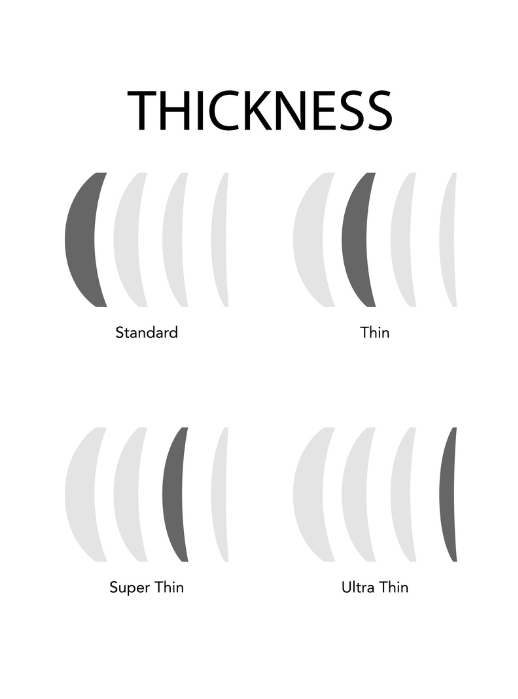
- 1.5 (Standard lenses): Basic, thicker lenses
- 1.56: Slightly thinner and lighter
- 1.67 (High index): Much thinner, ideal for stronger prescriptions
- 1.74 (High index): Ultra-thin, premium option
In simple terms:
👉 The higher the number, the thinner your lenses will be for the same prescription.
What Is a High Index Lens?
A high index lens is any lens with a higher refractive index than standard plastic, typically 1.67 or above.
These lenses are designed to:
- Reduce thickness, especially at the edges
- Improve comfort by being lighter
- Enhance appearance, particularly in thinner frames
They’re especially beneficial for people with strong prescriptions, where standard lenses can look bulky or feel heavy.
Why Lens Index Matters
Choosing the right lens index can make a noticeable difference in:
1. Thickness
Higher index lenses are much slimmer, especially important for strong prescriptions.
2. Weight
Thinner lenses mean lighter glasses, which are more comfortable for all-day wear.
3. Appearance
High index lenses reduce the “thick edge” look and help your glasses appear more natural.
4. Frame Compatibility
Thinner lenses work better with a wider range of frames, including thinner or rimless styles.
Do You Need High Index Lenses?
It depends on your prescription and preferences:
- Low prescription (+/- 0.25 to 2.00):
You likely won’t notice a huge difference, standard or 1.56 lenses are usually fine. - Moderate prescription (+/- 2.00 to 4.00):
A mid-index or high index lens can improve comfort and appearance. - High prescription (+/- 4.00 and above):
High index lenses are strongly recommended for thinner, lighter results.
Are High Index Lenses Worth It?
For many people, yes; especially if you:
- Want thinner, more discreet lenses
- Feel your current glasses are too heavy
- Have a stronger prescription
- Prefer slimmer or more stylish frames
However, if your prescription is low, the difference may be minimal, so a standard or 1.56 lens could be more cost-effective.
Lens index might sound technical, but it’s really about one simple thing: how thin and comfortable your lenses can be.
If you’re reglazing your glasses, choosing the right index can transform not just how well you see, but how your glasses look and feel every day.
If you’re unsure, it’s always worth discussing your prescription and lifestyle to find the perfect balance between performance, comfort, and cost.
